
Why Most Service Business Blogs Don't Work (And How to Fix It)
Most service business blogs fail because they're written randomly instead of strategically. Learn how topic clusters and pillar pages turn blog posts into real SEO traffic.
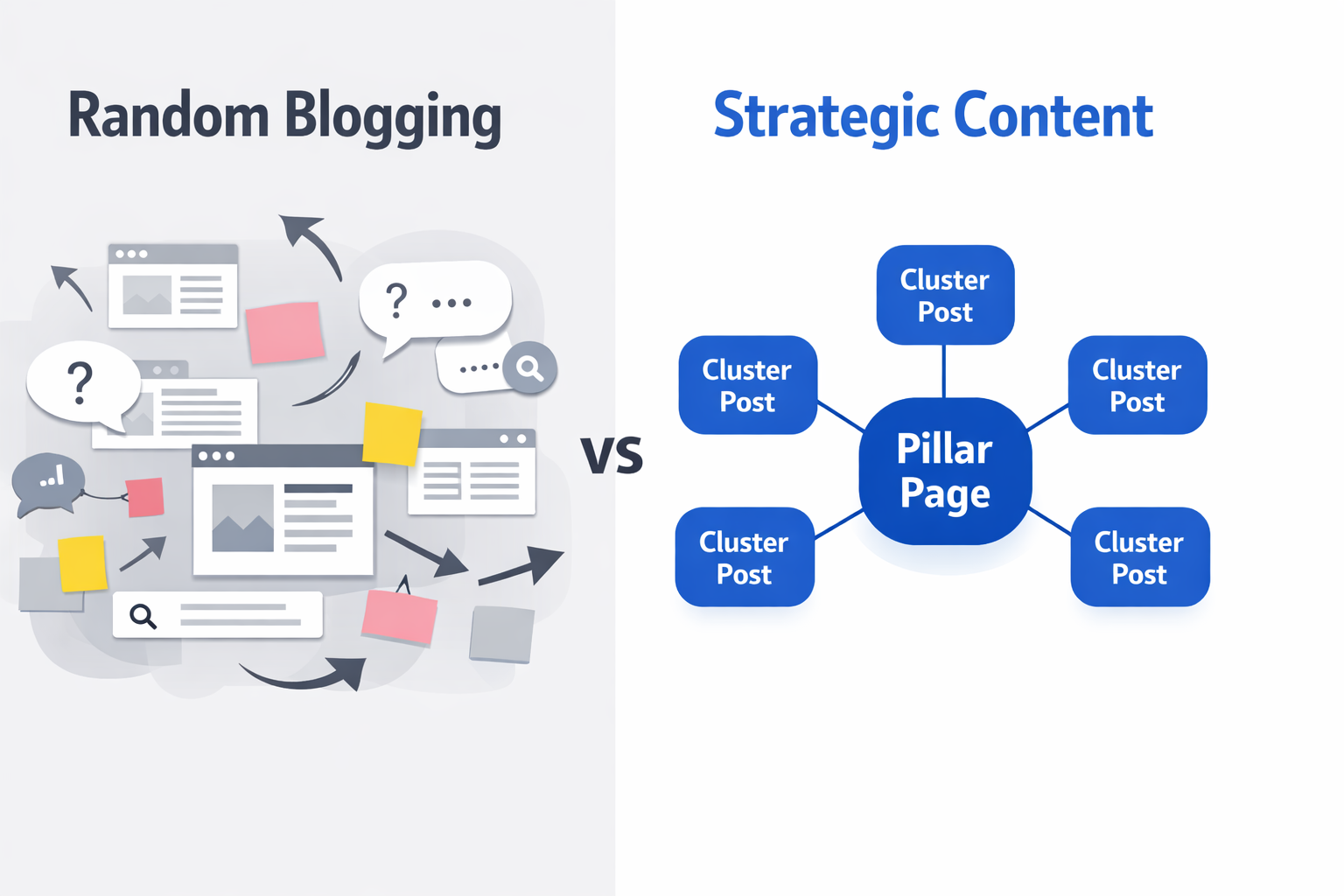
Why Most Service Business Blogs Don’t Work
Most service business blogs fail for the same simple reason: they write whatever comes to mind instead of what their customers are actually searching for.
Blogging can absolutely drive leads — but only if it’s strategic.
Here’s the difference.
The Problem With “Just Start Blogging”
You’ve probably heard the advice:
“Start a blog. Post consistently. The traffic will come.”
In reality, that almost never happens.
A plumber could publish “5 Tips for Healthy Pipes” once a month for an entire year and still get almost no traffic. Not because they didn’t try hard enough — but because the content wasn’t built around how people actually search.
Content that ranks tends to follow three rules:
- It targets a specific search query
- It answers the question better than the other results
- It exists inside a clear topic structure that builds authority
Consistency matters, but strategy matters first.
Keyword Research Is Table Stakes
Before writing anything, you need to understand what people are searching for.
Three questions matter:
- What terms do potential customers actually type into Google?
- What’s the search intent behind that query?
- How competitive is the keyword?
- What content already exists for it?
There are plenty of tools that help with this:
- Ahrefs
- Semrush
- Google Keyword Planner
- Even Google’s “People Also Ask” results can reveal great opportunities.
The goal isn’t just finding keywords — it’s understanding the questions your customers already have.
Build Topic Clusters, Not Random Posts
Instead of publishing unrelated blog posts, organize your content into topic clusters.
Think of it like a hub-and-spoke system.
Pillar Page A comprehensive overview of a broad topic.
Example: “Local SEO for HVAC Companies”
Cluster Posts Individual articles that go deeper into specific questions.
Examples:
- “How to Get More Google Reviews for Your HVAC Business”
- “Best Keywords for HVAC Companies”
- “How HVAC Businesses Can Rank in Google Maps”
Each cluster post links back to the pillar page.
This structure does two important things:
- It signals topical authority to Google.
- It creates strong internal linking, which helps pages rank faster.
Instead of isolated posts, you build a connected ecosystem of content.
Match Content Type to Search Intent
Not every search should be answered with a generic blog post.
Google rewards different formats depending on what people are searching for.
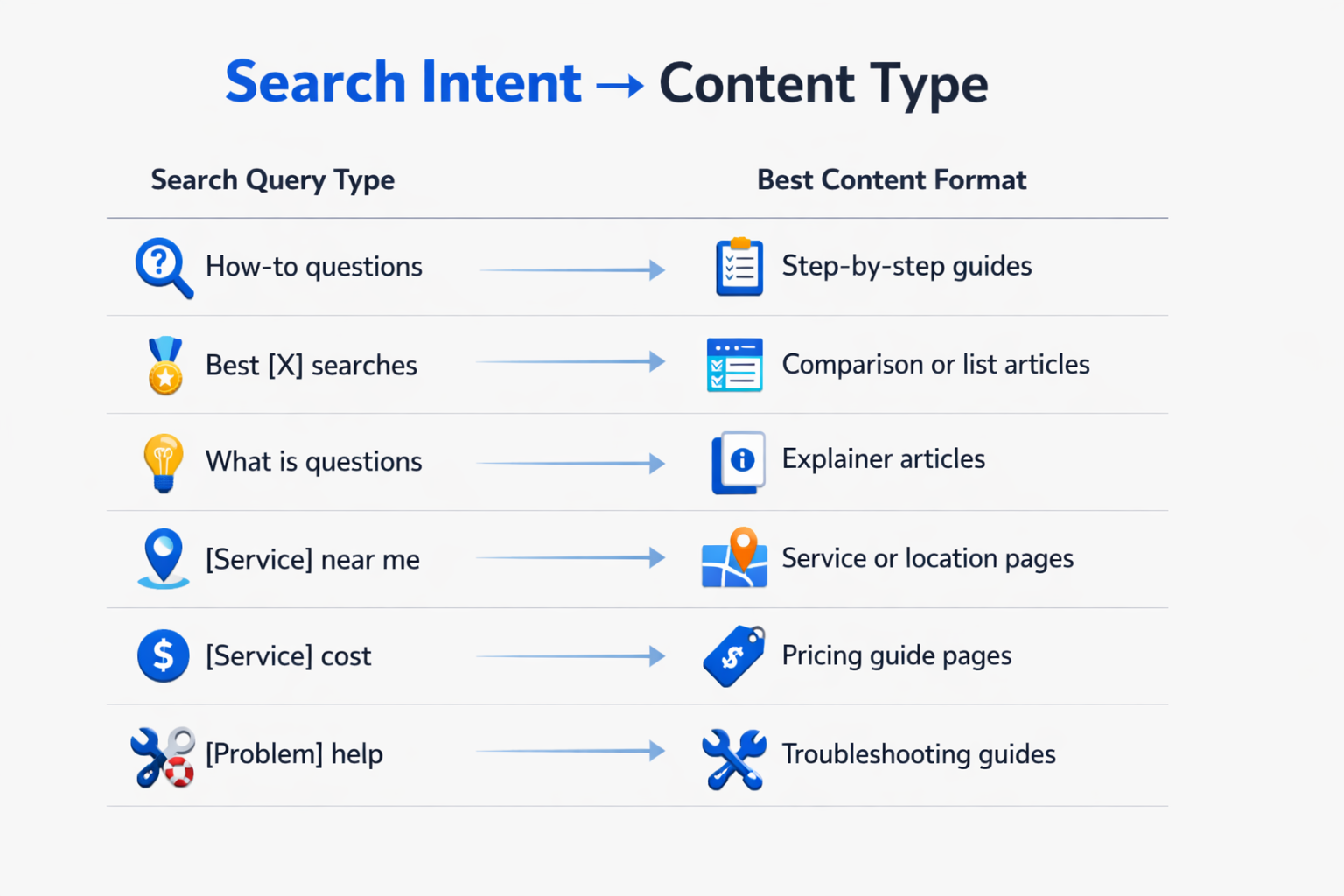
If you match the format to the intent, your chances of ranking increase dramatically.
Set a Realistic Publishing Cadence
More content does not automatically mean better results.
One well-researched article often performs better than four rushed ones.
For most service businesses starting out, a simple roadmap looks like this:
Months 1–3 Build the foundation.
- Create strong service pages
- Publish one pillar article
- Add two supporting cluster posts
Months 4–6 Expand the cluster.
- Answer common customer questions
- Target mid-tail keywords
- Add internal links
Month 7 and beyond
- Build additional topic clusters
- Update and improve existing content
- Strengthen internal linking
This approach builds authority over time instead of publishing disconnected posts.
Track What Actually Matters
Many businesses obsess over metrics that don’t move the needle.
Page views and social shares might feel good, but they don’t necessarily lead to new clients.
Instead, track metrics tied to real growth:
- Organic traffic from Google Search Console
- Rankings for your target keywords
- Leads generated from blog content (use UTM parameters or form tracking)
- Time on page and scroll depth, which indicate engagement
The goal isn’t traffic for the sake of traffic — it’s qualified visitors who become customers.
Strategy First, Content Second
Content strategy is one of the highest-leverage investments a service business can make.
A well-written article published today can generate leads for years.
But that only happens when the content is built with a clear strategy behind it.
Start with the questions your customers are already asking.
Then create the content that answers them better than anyone else.